


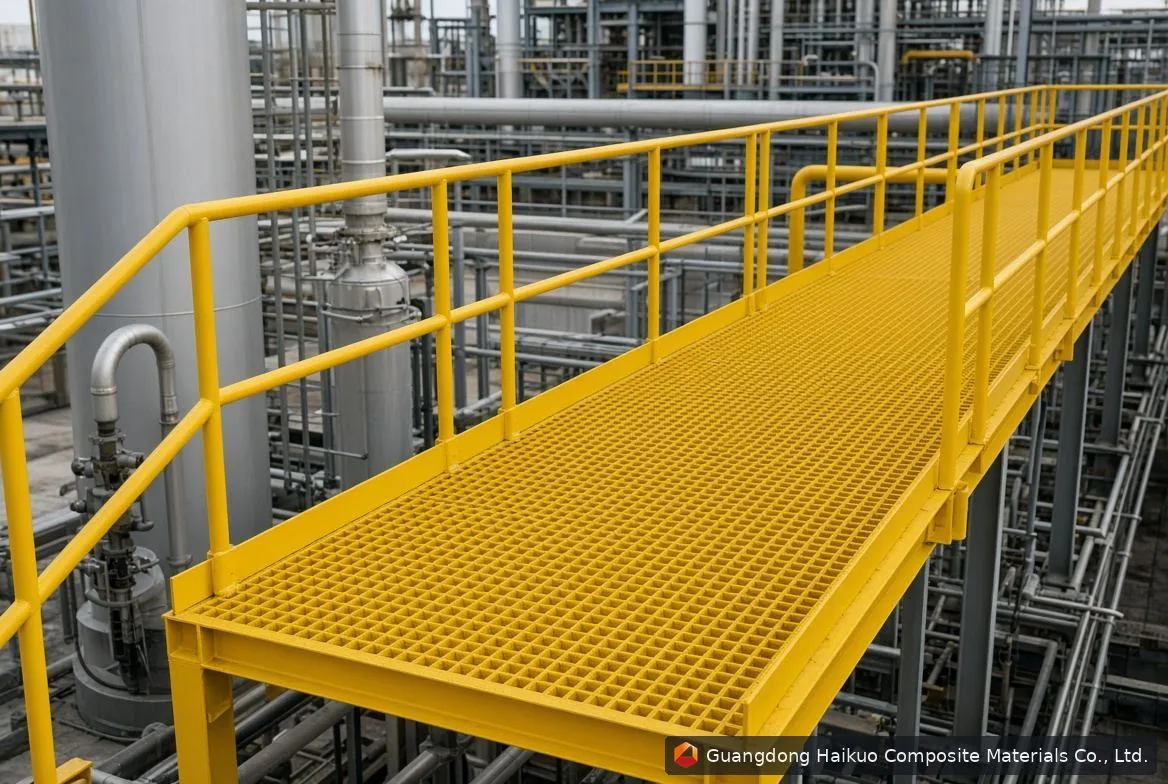
FRP walkways used in offshore platforms
FRP walkways have become a go-to for pedestrian and industrial applications in construction and engineering — but what does FRP actually stand for, and what sets these walkways apart from traditional materials?
Understanding FRP Walkways
FRP stands for Fiberglass Reinforced Plastic, a composite material known for its strength, durability, and corrosion resistance. FRP walkways are elevated platforms or pathways built from FRP grating panels — a grid-like structure of FRP bars that gives a sturdy, slip-resistant surface for pedestrian and industrial traffic.
Applications
FRP walkways cover a lot of ground:
Industrial walkways: safe, stable access for workers in factories, power plants, and other industrial facilities.
Offshore platforms: exceptional resistance to corrosion and weathering in the harsh marine environment.
Wastewater treatment plants: able to withstand harsh chemicals and acidic conditions.
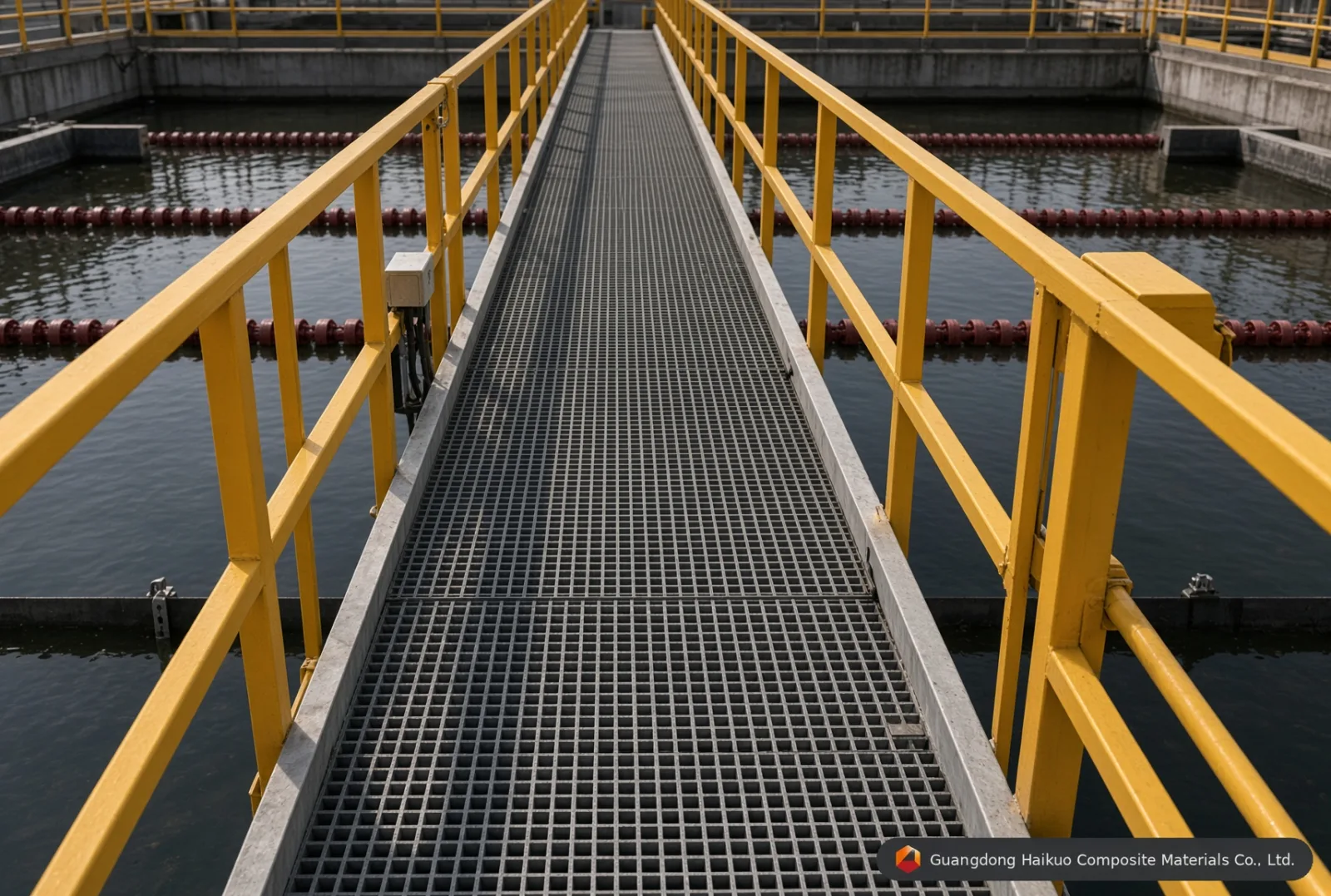
FRP walkways used in wastewater treatment plants
Food and beverage facilities: a non-porous, easy-to-clean surface that supports sanitation and prevents contamination.
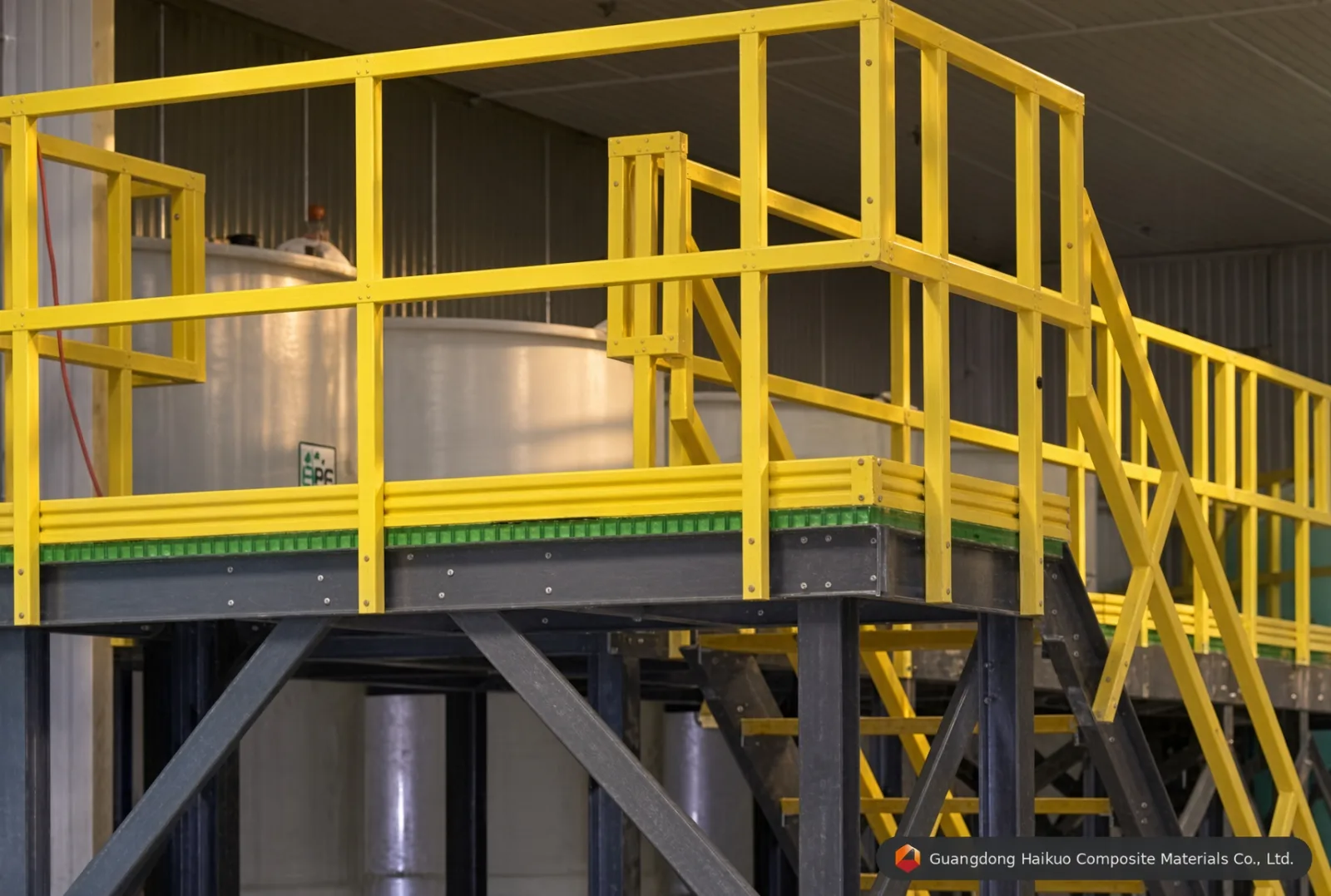
FRP walkways used in food and beverage facilities
Commercial buildings: a combination of safety, aesthetics, and low maintenance.
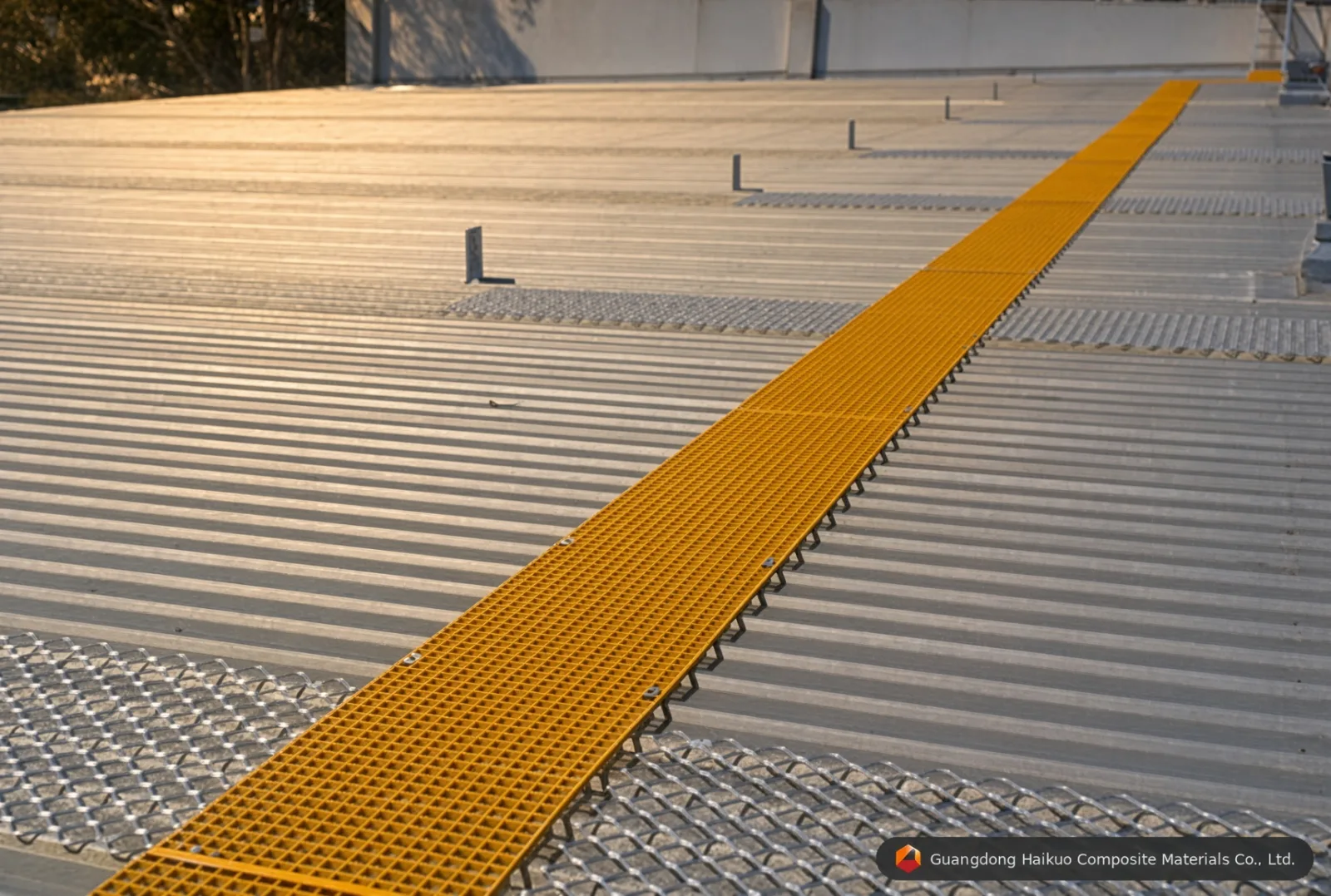
FRP walkways used in commercial buildings
Benefits
Durability and corrosion resistance: holds up in harsh environments where traditional materials would deteriorate.
Slip resistance: a textured surface that cuts the risk of slips and falls, especially in wet or oily conditions.
Low maintenance: minimal upkeep, saving time and resources on repairs and replacements.
Lightweight: significantly lighter than metal walkways, easing installation and transport.
Electrical insulation: electrically non-conductive, adding safety around potential electrical hazards.
Conclusion
FRP walkways have changed how safe, durable, low-maintenance elevated platforms get built. Their versatility and distinctive properties suit them to everything from industrial settings to commercial buildings, and as demand for sustainable, long-lasting infrastructure grows, FRP walkways look set to play a bigger role in what comes next.