


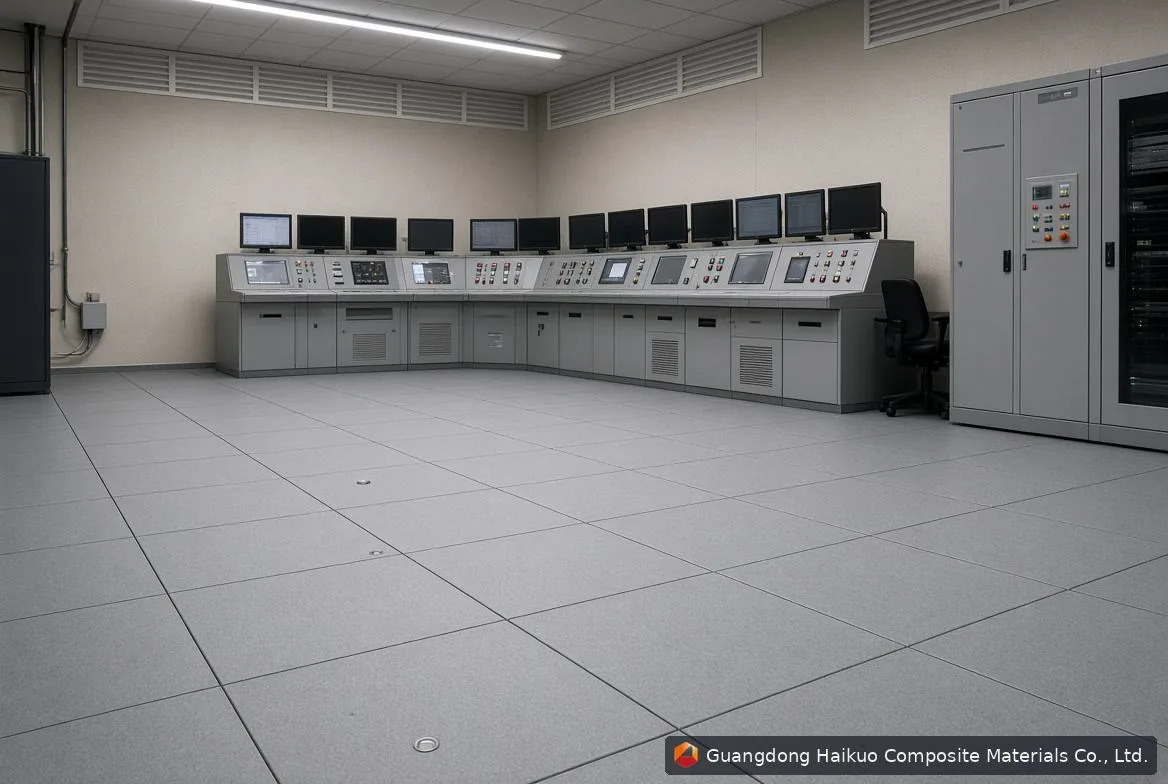
Advanced GFRP engineering: the new standard for high-performance industrial machinery components.
Industrial Evolution: Why GFRP is Replacing Metal in Processing Lines
In the high-intensity environment of plastics processing, equipment constantly faces abrasive resins, corrosive additives, and extreme thermal cycles. At Guangdong Haikuo Composite Materials Co., Ltd., we’ve watched a decisive shift take hold in 2026: manufacturers are swapping traditional steel and aluminum for GFRP (Glass Fiber Reinforced Polymer) composites. This transition isn’t just about weight — it’s about maximizing “uptime” with materials that stay chemically inert and thermally stable.
1. Technical Benchmarking: GFRP vs. Traditional Metals
In plastics processing — where moisture, chemical outgassing, and heat are constant companions — GFRP offers a distinctive mechanical profile. Here’s a technical comparison of why GFRP is the superior investment for modern equipment.
| Performance Factor | Stainless Steel (304/316) | Haikuo GFRP Composites | Processing Advantage |
|---|---|---|---|
| Chemical Resistance | Subject to pitting/oxidation | Immune to most acids/alkalis | Longer life in corrosive mixing |
| Thermal Conductivity | High (14-16 W/m·K) | Very Low (0.2-0.5 W/m·K) | Excellent heat insulation/Energy saving |
| Specific Strength | Baseline | 3x higher than steel | Lighter frames, lower energy use |
| Maintenance | Requires coating/polishing | Zero (Self-pigmented/Inert) | Reduced downtime for cleaning |
| Electromagnetic Property | Conductive/Interfering | Non-conductive/Transparent | Ideal for smart sensors/IoT hubs |
2. Key Benefits Optimized for the Factory Floor
Bringing GFRP into your processing line delivers immediate operational gains:
- Superior Heat Management: unlike metals, which act as heat sinks, GFRP’s low thermal conductivity helps maintain stable temperatures inside extruders and molds, cutting the energy heaters need.
- Abrasion Resistance: when processing glass-filled or mineral-filled polymers, GFRP components (engineered with specialized surface veils) resist “scouring” better than untreated aluminum.
- Vibration Damping: excellent internal damping properties significantly cut noise and mechanical fatigue in high-speed mixers and conveyors.
3. Application Matrix in Plastics Infrastructure
Our GFRP solutions integrate into several critical processing stages:
- Extrusion Systems: insulated shells and support frames that resist high heat and prevent thermal bridging.
- Injection & Blow Molding: lightweight mold bases and protective housings that reduce moving parts’ inertia, enabling faster cycle times.
- Mixers & Agitators: chemical-resistant bowls and blades built to handle the most aggressive polymer additives and colorants.
- Conveyor Systems: corrosion-proof belts and modular frames for transporting heavy, abrasive raw pellets or finished parts.
Industrial Equipment FAQ (GFRP Integration)
Q1: “Can GFRP components handle the high-pressure environment of injection molding?”
A: While the cavity is typically tool steel, GFRP is used for external housings, insulation plates, and structural frames — our GFRP withstands significant compressive loads while providing the thermal barrier steel can’t.
Q2: “What’s the maximum continuous operating temperature for Haikuo GFRP?”
A: Depending on the resin system (epoxy vs. vinyl ester), our composites operate continuously between 80°C and 180°C. For extreme heat zones, we offer specialized phenolic-based GFRP.
Q3: “How does GFRP reduce the total cost of ownership (TCO) for mixers?”
A: In chemical mixing, steel bowls often need expensive re-cladding or replacement due to acid erosion. GFRP resists chemicals through its entire cross-section, so it never needs re-coating — saving thousands in maintenance costs over 10 years.
Q4: “Is GFRP food-grade compliant for processing plastic food packaging?”
A: Yes — we can manufacture GFRP using FDA-compliant resin systems, making it safe for equipment producing food-grade plastic containers and wraps.
Optimize Your Production with Guangdong Haikuo
As an industrial manufacturing firm based in Huizhou, Guangdong, Guangdong Haikuo Composite Materials Co., Ltd. is a professional supplier of pultruded and molded GFRP solutions. We don’t just supply materials — we provide engineered components that make your plastics processing equipment faster, lighter, and more durable.
Consult with Helena Wang for Technical Integration & Project Quotes:
- Technical Contact: Helena Wang
- Email: helena@frphk.cn
- WhatsApp: +86 189 5198 8522
- Full Company Name: Guangdong Haikuo Composite Materials Co., Ltd.
- Available Resources: chemical compatibility charts, thermal insulation data, and custom fabrication blueprints.