


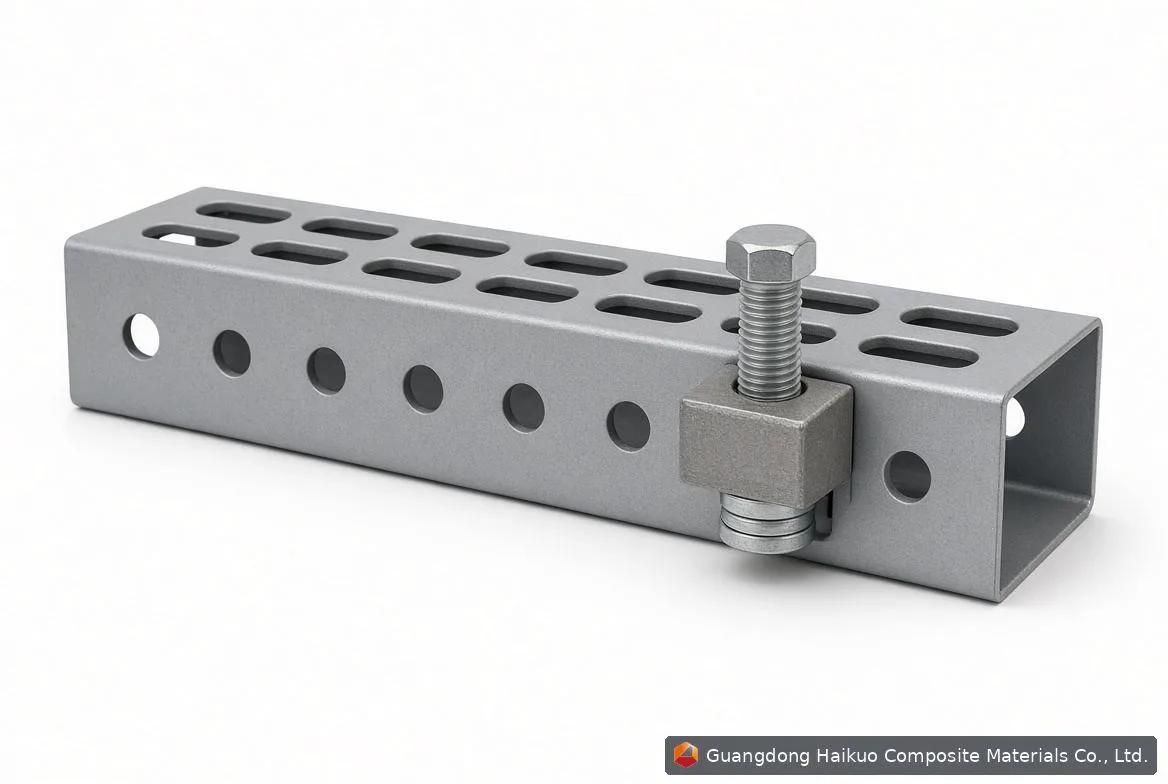
FRP C Channel
Two Materials, One Decision
For structural components like C channels, material choice can make or break a project. Steel has been the default for its strength and familiarity, but Fiberglass Reinforced Plastic (FRP) C channels are gaining traction as a modern alternative. Here’s how the two actually compare.
C channels — named for their “C”-shaped cross-section — are widely used in construction, manufacturing, and infrastructure. Steel has dominated for decades, but FRP, a composite of reinforcing fibers and resin, brings genuine advantages that challenge that dominance.
What Is an FRP C Channel?
An FRP C channel is a structural profile made by pultrusion — fiberglass reinforcements impregnated with resin (typically polyester, vinyl ester, or epoxy) and pulled through a heated die to form a solid C-shape. The result is light, corrosion-resistant, and impressively strong.
FRP’s composition can be tailored to specific needs, with additives like UV inhibitors or fire retardants boosting performance — which is why FRP C channels show up across construction, marine engineering, and more.
What Is a Steel C Channel?
A steel C channel is a metal profile formed by rolling or pressing steel into a C shape — available in carbon steel, stainless steel, or galvanized varieties. Steel’s reliability and strength have made it a structural engineering staple for centuries. Its trade-offs are weight and vulnerability to rust, which can limit its use in certain environments.
Head-to-Head Comparison
1. Strength and Load-Bearing Capacity
Steel: incredibly strong, with high tensile strength suited to heavy-duty applications — skyscrapers, bridges, industrial frameworks.
FRP: also strong, especially reinforced with fiberglass or carbon fiber. It may not match steel’s raw tensile strength, but its strength-to-weight ratio is excellent for many structural tasks without the bulk.
Verdict: steel wins on absolute strength; FRP holds its own where weight matters.
2. Weight
Steel: heavy, which complicates transport, installation, and structural design in weight-sensitive projects.
FRP: often 75% lighter than steel equivalents — easier to handle, cheaper to ship, and better suited to weight-sensitive designs like aerospace or portable structures.
Verdict: FRP takes the lead on weight.
3. Corrosion Resistance
Steel: prone to rust in humid, salty, or acidic environments. Stainless steel and galvanized coatings help, but add cost without fully solving the problem.
FRP: inherently corrosion-resistant thanks to its non-metallic composition, thriving in coastal areas, chemical plants, or wastewater facilities without degrading.
Verdict: FRP wins clearly on corrosion resistance.
4. Cost
Steel: generally cheaper upfront, with a well-established supply chain keeping costs predictable — though long-term maintenance and corrosion protection add up.
FRP: often costs more initially due to manufacturing and raw materials, but durability and low maintenance can make it more cost-effective over time.
Verdict: steel wins upfront; FRP may save money long-term.
5. Maintenance
Steel: needs regular maintenance — painting, coating, replacing rusted sections — a real burden on large projects.
FRP: low-maintenance, resisting weathering, UV, and corrosion without protective treatments.
Verdict: FRP excels here.
6. Thermal and Electrical Conductivity
Steel: conducts heat and electricity — a drawback for electrical enclosures or extreme-temperature climates.
FRP: a natural insulator, ideal for utility poles, electrical supports, and energy-efficient designs.
Verdict: FRP is superior for insulation.
7. Design Flexibility
Steel: limited to standard sizes and shapes, though custom fabrication is possible at higher cost.
FRP: the pultrusion process allows custom shape, size, and even color, offering more design freedom.
Verdict: FRP wins for flexibility.
Comparison Table
| Property | FRP C Channel | Steel C Channel |
|---|---|---|
| Strength | High (relative to weight) | Very High |
| Weight | Light | Heavy |
| Corrosion Resistance | Excellent | Poor (unless treated) |
| Initial Cost | Higher | Lower |
| Maintenance | Low | High |
| Conductivity | Non-conductive | Conductive |
| Design Flexibility | High | Moderate |
Where Each Material Shines
Steel C channels: heavy industrial settings where maximum load-bearing capacity is non-negotiable — large bridges, factory frameworks, high-rise buildings.
FRP C channels: environments where corrosion, weight, or insulation matter most:
- Marine: docks and piers exposed to saltwater.
- Chemical plants: structures resisting corrosive substances.
- Transportation: lightweight railings or vehicle components.
- Utilities: non-conductive supports for power lines.
Environmental Impact
Steel production is energy-intensive with notable carbon emissions, but it’s highly recyclable, offsetting some of that impact. FRP manufacturing has a lighter energy footprint, and its long service life means fewer replacements — though recycling FRP remains harder, even as the technology improves.
Verdict: steel wins on recyclability; FRP wins on long-term durability.
Which Should You Choose?
- Choose steel if: you need maximum strength, have a tight upfront budget, and can manage corrosion through coatings or maintenance.
- Choose FRP if: you prioritize weight savings, corrosion resistance, insulation, or low maintenance, and are willing to invest for long-term benefits.
Steel remains king for traditional heavy-duty projects, but FRP C channels often come out ahead for corrosion-prone or lightweight applications.
Conclusion
This isn’t about one material being universally better — it’s about the right fit. Steel brings high strength and affordability; FRP brings lightweight durability and resistance. Weighing environment, cost, and performance requirements will point you to the material that fits your project.