Why FRP Pultruded Profiles Outperform Traditional Materials in Civil Engineering and Infrastructure
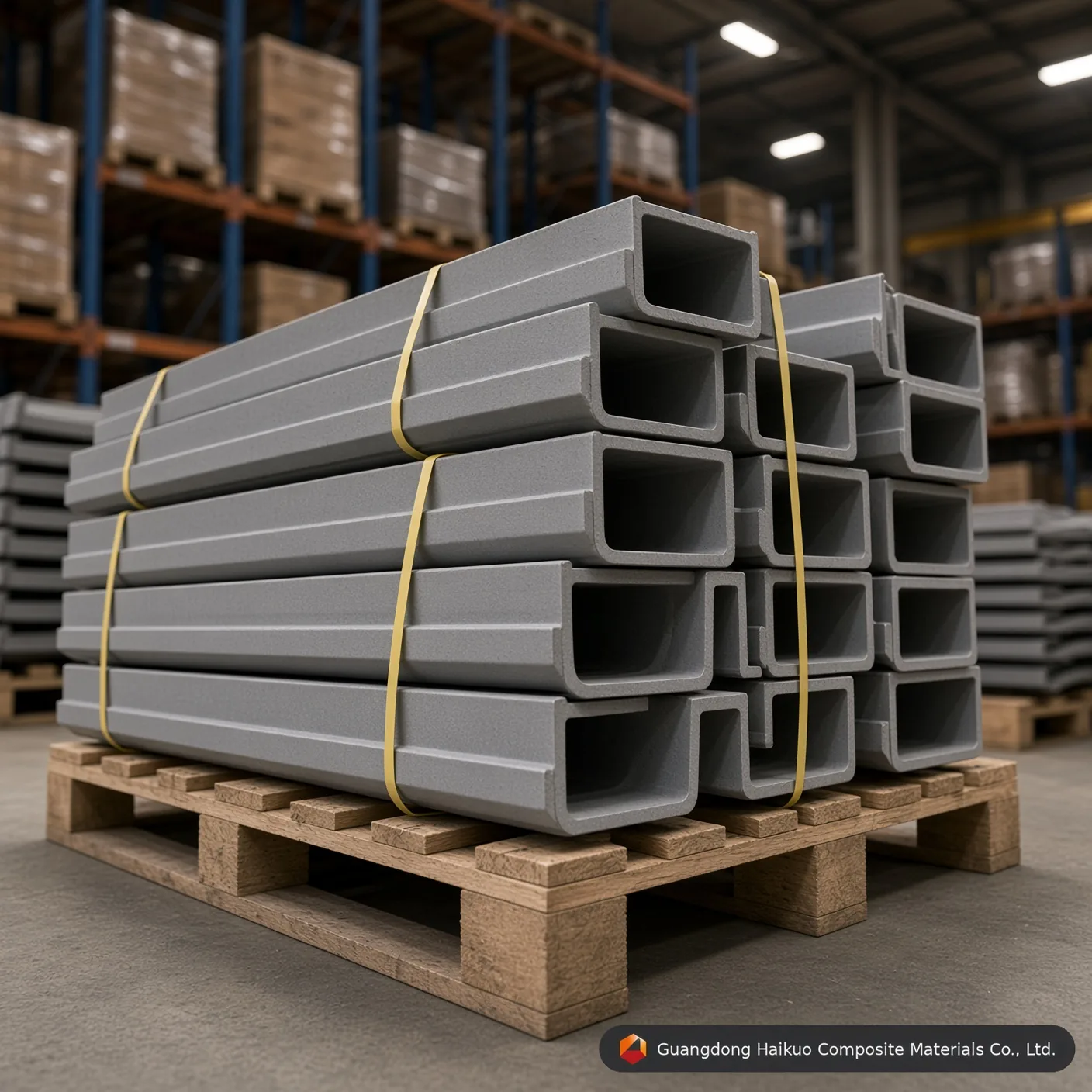
FRP Pultruded Profiles
Civil engineering today calls for materials that combine high strength, low weight, and outstanding durability all at once — and that demand keeps climbing. Steel, aluminum, and timber, once the default choices, are steadily giving way to FRP (Fiberglass Reinforced Polymer) pultruded profiles. As a professional manufacturer, Haikuo supplies high-performance structural shapes that extend how long infrastructure projects can last.
How Structural Materials Have Evolved
Steel held the title of construction’s “gold standard” for decades, yet problems such as corrosion, excess weight, and steep maintenance costs have pushed engineers toward newer alternatives. Produced through a continuous pultrusion process, FRP pultruded profiles offer a composite solution built to directly address those vulnerabilities.
Core Advantages of FRP Pultruded Profiles
1. Exceptional Resistance to Corrosion
While steel rusts and wood rots, FRP profiles shrug off chemicals, saltwater, and demanding industrial conditions alike. That resilience makes them a natural fit for chemical plants, offshore platforms, and wastewater treatment facilities.
2. Strong Yet Lightweight
FRP weighs in at roughly 1/4 the density of steel, yet keeps comparable longitudinal strength. That lighter weight lowers transportation costs and simplifies on-site installation, often without the need for heavy lifting machinery.
3. Electrically Non-Conductive and RF-Transparent
Safety comes first in electrical and telecommunication infrastructure. FRP acts as an excellent electrical insulator and does not interfere with electromagnetic waves, which makes it well suited to cooling towers or 5G base station supports.
Comparing the Technical Specifications
| Property | FRP Pultruded Profile | Structural Steel | Aluminum |
|---|---|---|---|
| Density (g/cm³) | 1.6 – 2.0 | 7.85 | 2.7 |
| Corrosion Resistance | Excellent | Poor | Moderate |
| Electrical Conductivity | Non-conductive | High | High |
| Maintenance Cost | Very Low | High (Painting/Galvanizing) | Moderate |
| Service Life | 50+ Years | 15-20 Years (in harsh environments) | 25-30 Years |
Where FRP Is Applied in Infrastructure
“As infrastructure shifts toward sustainable, low-maintenance solutions, FRP has emerged as an important material for the 21st century.”
Our products serve a broad range of sectors, including:
- Bridge Components: Used for girders, bridge decks, and pedestrian walkways.
- Cooling Towers: Structural frames built to withstand constant moisture and chemical exposure.
- Platform Systems: Found in safety ladders, gratings, and handrail systems throughout industrial plants.
- Agriculture: Applied as support structures for greenhouses and livestock fencing.
How Haikuo Backs Your Project
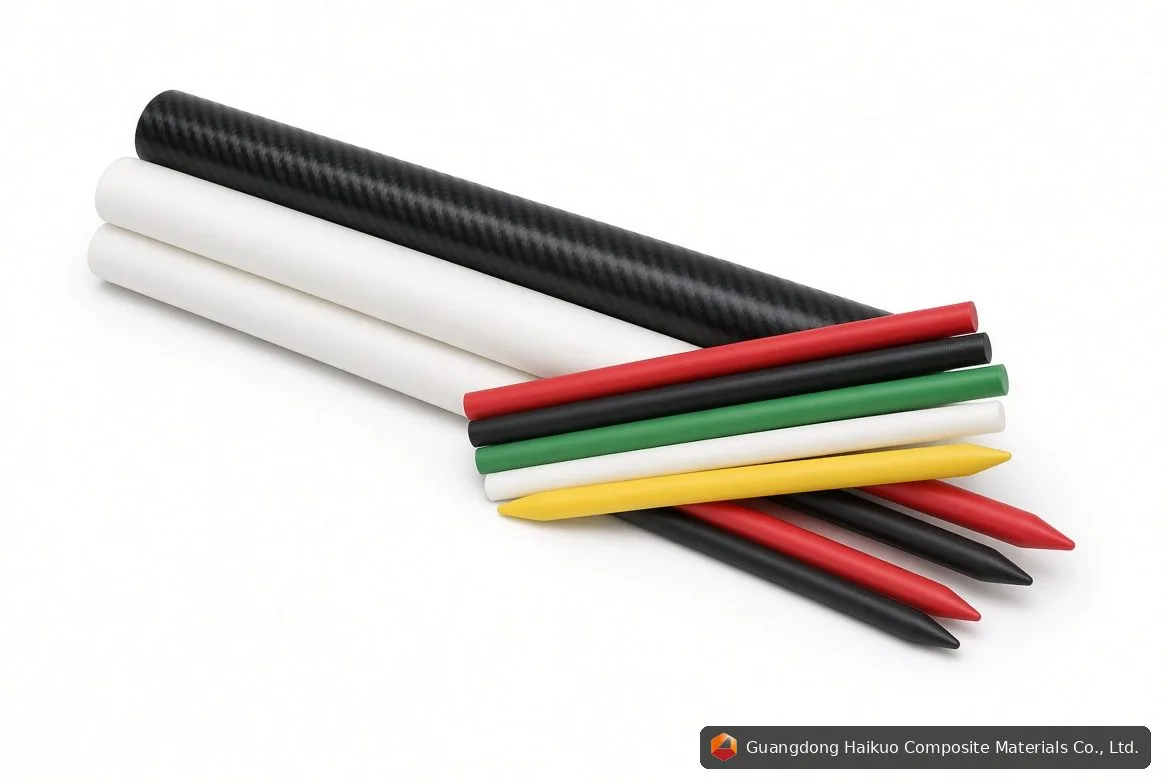
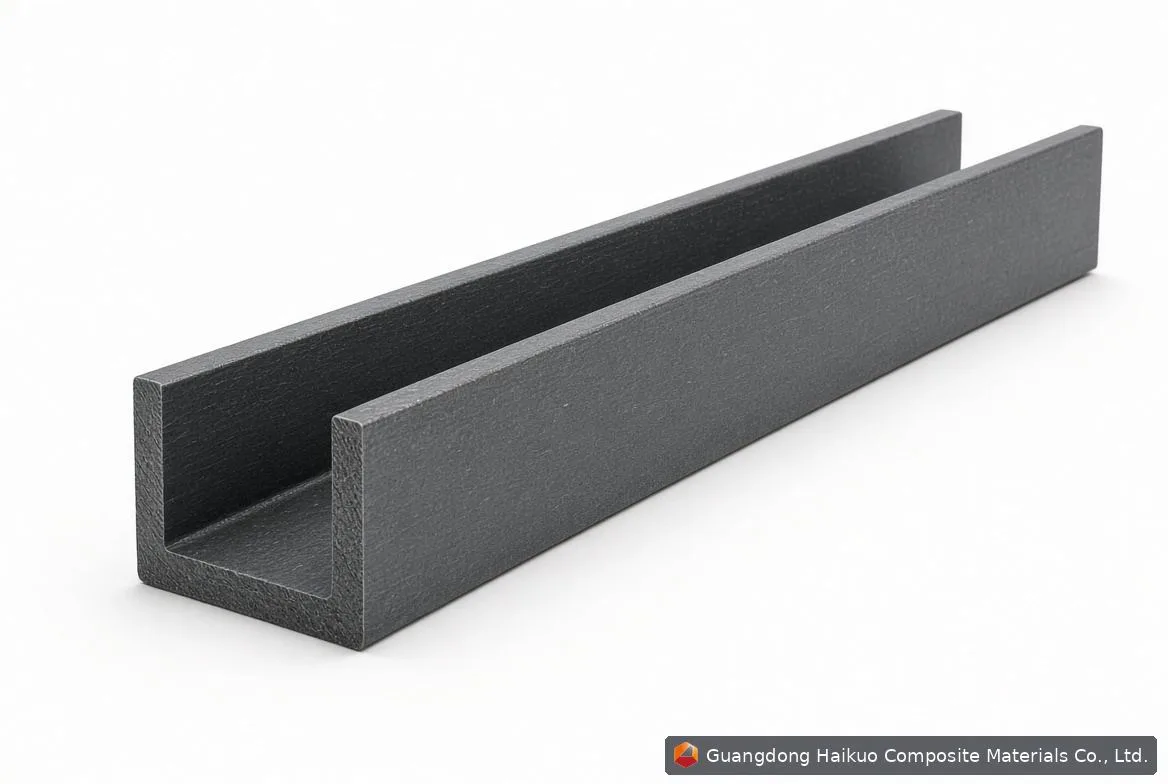
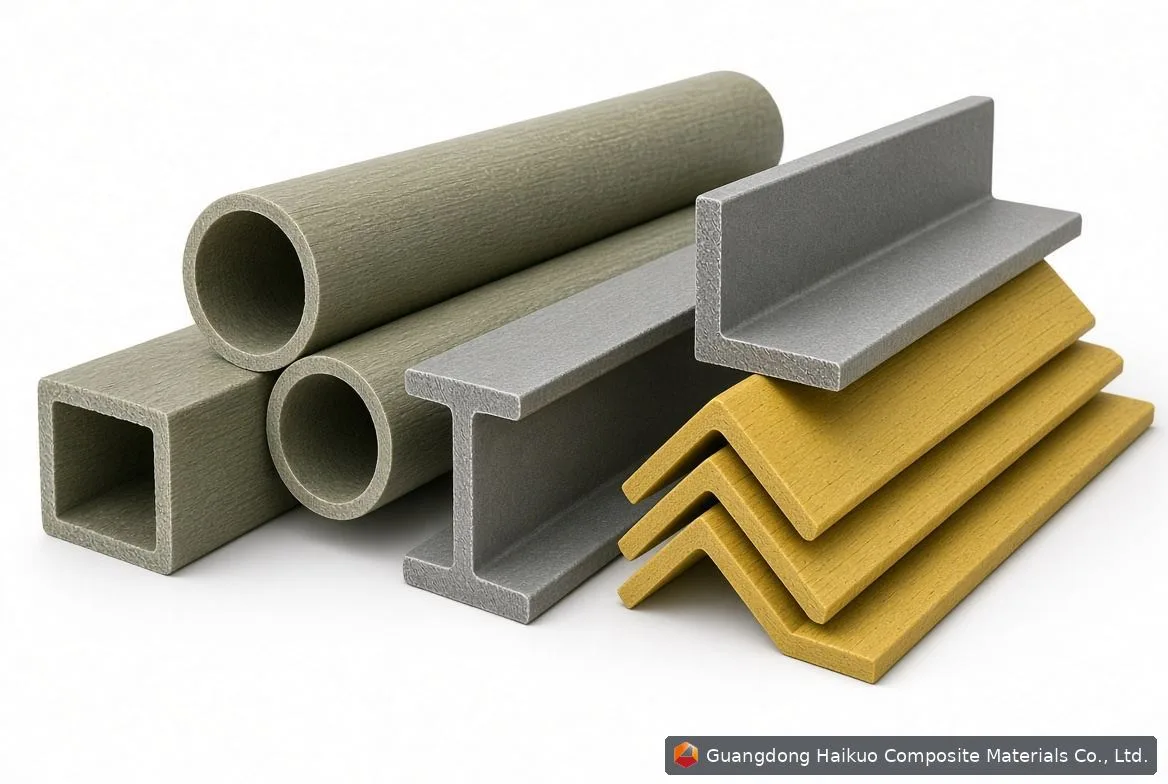
Haikuo goes beyond selling products to deliver Integrated Solutions. Whether it is designing custom pultrusion dies or supplying fiberglass pultruded profiles, we equip our clients with the tools and materials they need to succeed. All of our pultruded profiles (including I-beams, channels, tubes, and angles) are manufactured under strict ISO quality control standards.
Looking for a dependable partner on your next engineering project? Our team of experts is ready to help with material selection and technical support. Choosing FRP means investing in a future that is sustainable, cost-effective, and built to last.
Reach out to our engineering team today for a custom quote on FRP profiles, or to learn more about our production capabilities.
Industrial Application Specs & Field Insights
| Field Factor | FRP Pultruded Profiles | Steel | Aluminum/Timber |
|---|---|---|---|
| Corrosion Resistance | Total immunity | Rusts, high maintenance cost | Aluminum corrodes/pits; timber rots |
| Weight | Lightweight | Heavy | Aluminum light; timber moderate |
| Maintenance Cost Over Structure Lifetime | Low | High | Moderate to high |
| Longevity in Infrastructure Applications | Long service life | Reduced by corrosion | Reduced by corrosion/decay |
Field Deployment FAQ
Q1: Why are civil engineers moving away from steel for structural profiles?
Answer: Corrosion, heavy weight, and high maintenance costs have pushed engineers toward FRP pultruded profiles, which deliver comparable or superior strength without steel’s long-term upkeep burden.
Q2: What civil engineering applications commonly use FRP pultruded profiles?
Answer: Bridges, platforms, structural framing, and infrastructure components where high strength, light weight, and long-term durability are design priorities.
Q3: How does FRP performance compare to aluminum in structural applications?
Answer: FRP offers comparable or better strength-to-weight performance while avoiding aluminum’s susceptibility to corrosion and pitting in certain chemical or marine environments.
Q4: Is FRP a proven, code-recognized material for infrastructure projects?
Answer: Yes, FRP pultruded profiles are increasingly referenced in civil engineering design codes and have a growing track record in real infrastructure projects worldwide.
Q5: What is the expected service life of FRP structural profiles in infrastructure?
Answer: With no rust, rot, or corrosion-driven degradation, FRP profiles typically achieve a significantly longer, low-maintenance service life than comparable steel or timber structural elements.