


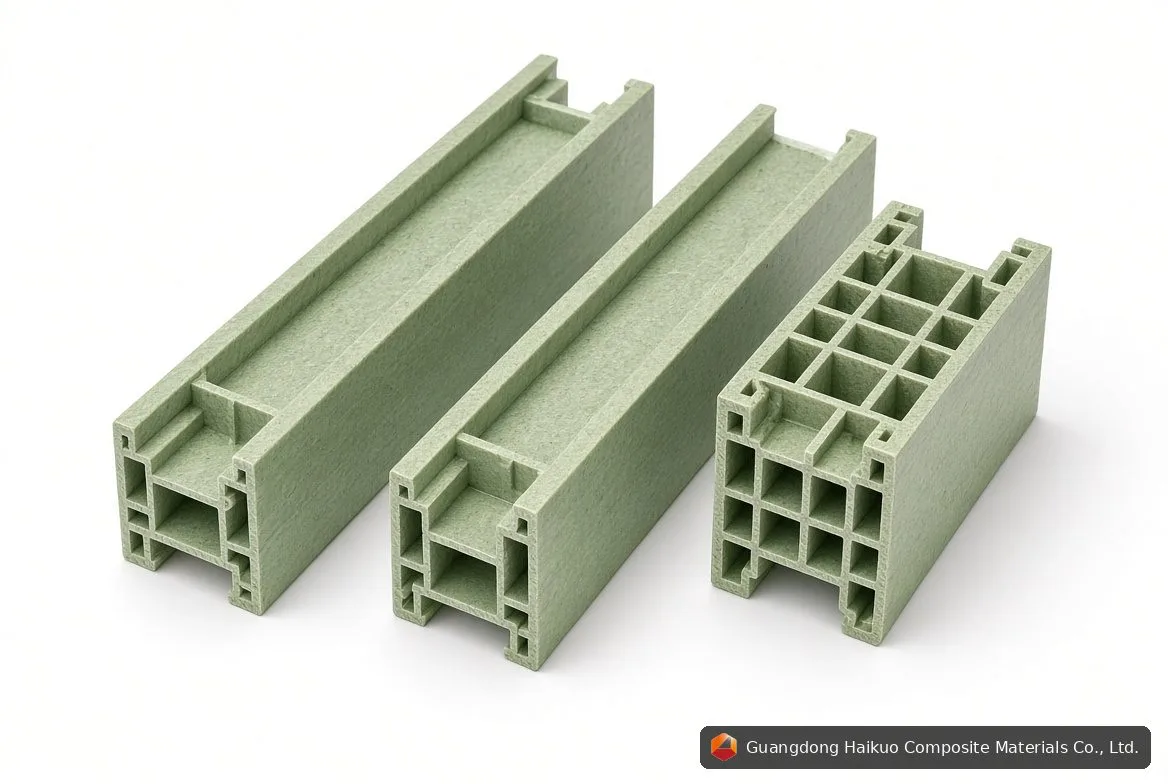
Glass Reinforced Plastic (GRP), also known as fiberglass reinforced plastic or FRP, is a composite material that’s grown significantly in popularity thanks to its exceptional properties and wide range of applications. Made from a resin matrix reinforced with glass fibers, GRP offers a distinctive combination of strength, durability, and versatility that suits many industries.
Understanding GRP
GRP is created by combining a resin, such as polyester or epoxy, with glass fibers. The glass fibers give the material its strength and stiffness, while the resin acts as a binder holding the fibers together. The resulting composite is lightweight, corrosion-resistant, and highly customizable.
Properties of GRP
High strength-to-weight ratio: excellent ratio, ideal where weight is a critical factor.
Corrosion resistance: highly resistant to chemicals, acids, and alkalis, suited to harsh environments.
Dimensional stability: holds its shape and size even under varying temperature conditions.
Electrical insulation: an excellent electrical insulator, well suited to electrical applications.
Design flexibility: GRP can be molded into a variety of shapes and sizes.
Manufacturing Process
Manufacturing GRP typically involves these steps:
Resin preparation: the resin is mixed with a catalyst to start the curing process.
Fiber reinforcement: glass fibers are cut or chopped to the desired length and added to the resin.
Molding: the resin-fiber mixture is placed into a mold and cured under heat and pressure to form the desired shape.
Applications of GRP
GRP sees extensive use across various industries:
Construction: used for roofing, cladding, flooring, and as a corrosion-resistant lining for tanks and pipes.
Marine: used for boat hulls, decks, and other marine components, thanks to corrosion resistance and light weight.
Chemical processing: used to construct tanks, pipes, and equipment for handling corrosive chemicals.
Automotive: used for automotive components like body panels and spoilers.
Electrical: GRP is used for electrical enclosures, insulators, and cable trays.
Benefits of Using GRP
Durability: highly durable, able to withstand harsh environmental conditions.
Corrosion resistance: resistant to corrosion, ideal for corrosive environments.
Lightweight: reduces transportation and installation costs.
Design flexibility: GRP molds into complex shapes for customized designs.
Cost-effective: often cost-effective over its lifespan, thanks to durability and low maintenance.
Comparison With Other Materials
Compared to traditional materials like steel and concrete, GRP offers real advantages:
Lighter weight: significantly lighter than steel and concrete.
Higher corrosion resistance: more resistant to corrosion than steel.
Easier to fabricate: GRP molds easily into complex shapes.
Better insulation properties: better thermal and electrical insulation than steel and concrete.
Conclusion
GRP is a versatile, high-performance composite offering real benefits across a wide range of applications. Its combination of strength, durability, corrosion resistance, and design flexibility makes it an excellent choice for industries seeking lightweight, durable, cost-effective materials. As technology advances, GRP’s applications are likely to keep expanding.