


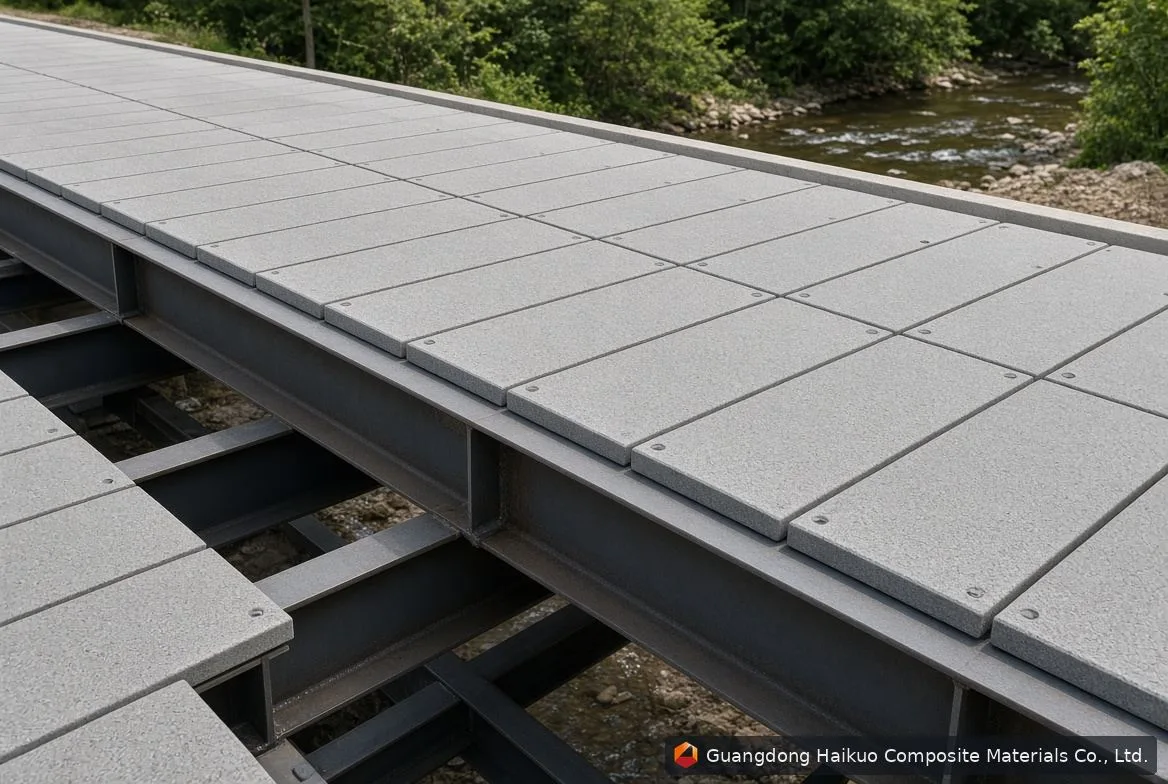
Bridge construction is always searching for durable, sustainable, cost-effective solutions, and FRP (Fiberglass Reinforced Plastic) bridge decks have become a real game-changer — bringing genuinely useful properties and environmental advantages to modern bridge infrastructure.
What FRP Bridge Decks Are
FRP bridge decks are made of fiberglass fibers embedded in a resin matrix, typically epoxy or polyester — a combination that delivers strength, durability, and light weight in one material, making it a strong fit for bridge construction.
Key Properties
Corrosion resistance: unlike steel-reinforced concrete decks, FRP resists chemicals, salts, and de-icing agents, extending lifespan and cutting maintenance costs.
Light weight: significantly lighter than concrete, reducing overall bridge weight — lower construction costs, easier transport, and less strain on piers and foundations.
Strength and load-bearing capacity: FRP bridge decks handle heavy traffic loads and harsh environmental conditions well.
Durability: resists wear, tear, and impact, offering a long-lasting, reliable solution.
Electrical insulation: non-conductive, reducing the risk of electrical hazards and stray currents that could damage bridge components.
Design flexibility: greater flexibility than concrete decks, allowing curved shapes and adaptation to different bridge geometries.
Where FRP Bridge Decks Are Used
New bridge construction: increasingly specified for durability, light weight, and design flexibility.
Bridge rehabilitation and replacement: extending the lifespan of aging bridges and improving structural integrity.
Pedestrian and cyclist bridges: light weight, corrosion resistance, and aesthetics make FRP a natural fit.
Temporary and emergency bridges: quick to install, light, and able to handle heavy loads.
Benefits
Lower lifecycle costs: extended lifespan, less maintenance, and corrosion resistance mean lower costs than concrete decks over time.
Better durability: fewer repairs and replacements, extending the bridge’s service life.
Environmental sustainability: using less resource-intensive concrete lowers the environmental impact of construction and maintenance.
Faster construction: quicker installation than concrete decks means faster project completion and less traffic disruption.
Better safety: corrosion resistance and non-conductive properties reduce the risk of structural failure and electrical hazards.
Conclusion
FRP bridge decks have become a genuinely transformative solution in bridge construction — combining durability, sustainability, cost-effectiveness, and design flexibility. As demand grows for resilient, environmentally responsible infrastructure, FRP bridge decks look set to play a growing role in the future of bridge construction, helping engineers build structures that are long-lasting, safe, and economically sound.