


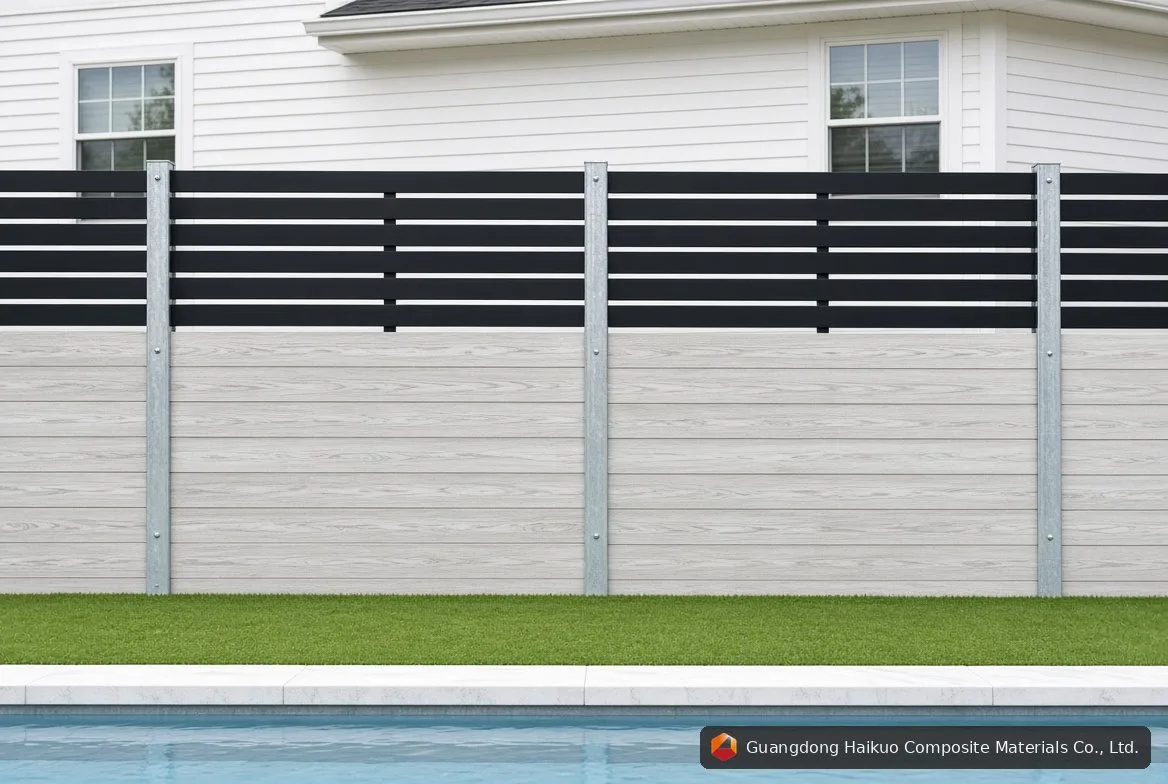
corrosion resistant retaining wall Australia
Material choice plays a big role in the long-term performance and cost of a retaining wall system, and that’s especially true across Australia’s varied conditions. Concrete has traditionally dominated the market, but composite FRP retaining wall systems are increasingly seen as a durable alternative.
Here’s how the two compare from an Australian engineering and project-management perspective.
How Each Material Handles Australian Conditions
Australia’s climate covers coastal exposure, high humidity, temperature swings, and aggressive soil — all factors that shape how a retaining wall performs over time.
Concrete retaining walls depend on steel reinforcement, which corrodes when exposed to moisture and salt. Once corrosion sets in, cracking and spalling tend to follow.
Composite FRP retaining walls, by contrast, use corrosion-resistant fiberglass reinforcement that simply doesn’t rust — a strong fit for Australia’s coastal and marine environments.
Durability and Service Life
For Australian infrastructure projects with long design-life requirements, durability matters a great deal.
- Concrete retaining walls can need repair from cracking and corrosion over time.
- FRP retaining wall systems hold their mechanical performance steady over long service periods.
That lower maintenance burden translates directly into better lifecycle performance for FRP systems.
Installation and Construction Efficiency
Construction efficiency matters a lot in Australia, where many projects sit in remote or logistically difficult locations.
Concrete retaining walls need heavy lifting equipment, formwork, and curing time — all of which can stretch out schedules and add labor cost.
Composite retaining wall systems are lightweight and modular, allowing faster installation with far less heavy machinery involved.
Transportation and Site Access
Concrete’s weight makes transport expensive, particularly to remote sites across Australia.
FRP retaining wall systems cut transportation loads significantly, making them a more practical fit where site access is limited or transport distances are long.
Comparing Lifecycle Costs
Initial material costs may differ, but lifecycle cost is usually the more accurate measure of real value.
| Factor | FRP Retaining Wall | Concrete Retaining Wall |
|---|---|---|
| Corrosion Resistance | Excellent | Limited |
| Installation Time | Fast | Slow |
| Maintenance | Low | High |
| Lifecycle Cost | Optimized | Higher over time |
Compliance and Engineering Considerations
Both concrete and FRP systems can be engineered to meet Australian project specifications — proper design, material selection, and load calculations matter regardless of which system you choose.
Composite systems do offer extra flexibility for modular design and customization, though.
Which System Fits Your Project?
The right choice depends on project-specific factors — environmental exposure, site access, and long-term maintenance expectations all play a role.
For projects facing coastal or corrosive conditions, composite FRP retaining wall systems offer a clear performance edge.
Learn more about FRP Retaining Wall Systems for Australia
Conclusion
As Australian infrastructure standards keep evolving, material selection is leaning harder toward durability, efficiency, and lifecycle value. Composite FRP retaining wall systems offer a compelling alternative to traditional concrete, particularly in Australia’s more challenging environments.