


Short answer. Carbon fibre (CFRP) is far stiffer and lighter than glass (GFRP) but costs several times more and is conductive. Glass is the practical choice for most structural, electrical and corrosion uses. Pick carbon only where stiffness or weight justify the cost and conductivity is acceptable.
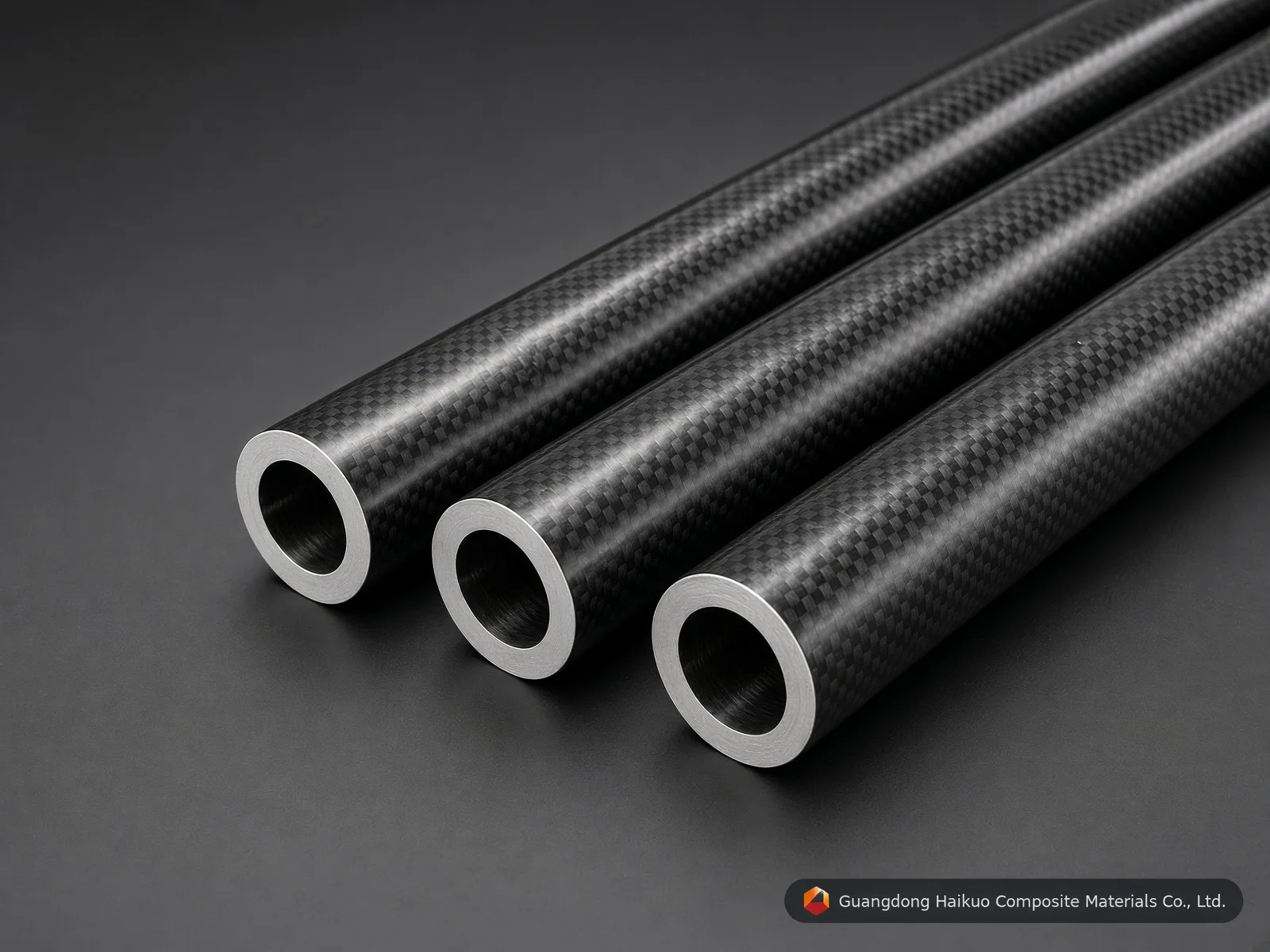
| GFRP (glass) | CFRP (carbon) | |
|---|---|---|
| Stiffness (modulus) | about 17–30 GPa in a typical pultruded profile | much higher; can approach or exceed steel in the fibre direction |
| Density | about 1.8–2.0 g/cm³ | about 1.5–1.6 g/cm³ |
| Strength | High in tension | Very high in tension |
| Electrical | Insulating | Conductive |
| Impact and damage | Tougher; tolerates impact | More brittle; needs care |
| Galvanic corrosion | None | Can corrode metals in contact (aluminium, steel) |
| Cost | Low | High (several times glass) |
How to choose
- Need insulation, low cost or chemical resistance: GFRP.
- Need maximum stiffness for the weight: CFRP, or a hybrid with carbon only where stiffness is needed.
- Mixed: hybrid pultrusion puts carbon in the outer layers or flanges and glass elsewhere; ask the maker what is feasible.
For the resin side of the decision see FRP resin guide. Basics of fibres: rovings, mat and veils.
Practical design points for carbon
- Galvanic corrosion: carbon in contact with aluminium or steel in a wet environment can corrode the metal; isolate with a glass layer, insulating washers or sealants.
- Conductivity: carbon conducts, so it cannot replace glass where insulation is required.
- Cutting: carbon dust is conductive and an irritant; use extraction and PPE.
- Cost: carbon costs several times glass, so use it only where the stiffness or weight saving pays back.
- Hybrids: carbon in the outer layers and glass in the core can give most of the stiffness gain at a fraction of the cost.
Typical applications
- telescoping masts, booms and robot arms where stiffness-to-weight matters (carbon);
- electrical supports, cable trays and walkways (glass);
- marine and corrosion-prone structures (glass with a suitable resin).
Send us your requirement
Guangdong Haikuo Composite Materials Co., Ltd. (Huizhou, Guangdong) designs pultrusion moulds in-house and produces custom FRP profiles. Send a drawing, a sample or just the application and the environment, and we will tell you what is feasible.
Email: helena@frphk.cn | Phone: +86 189 5198 8522